

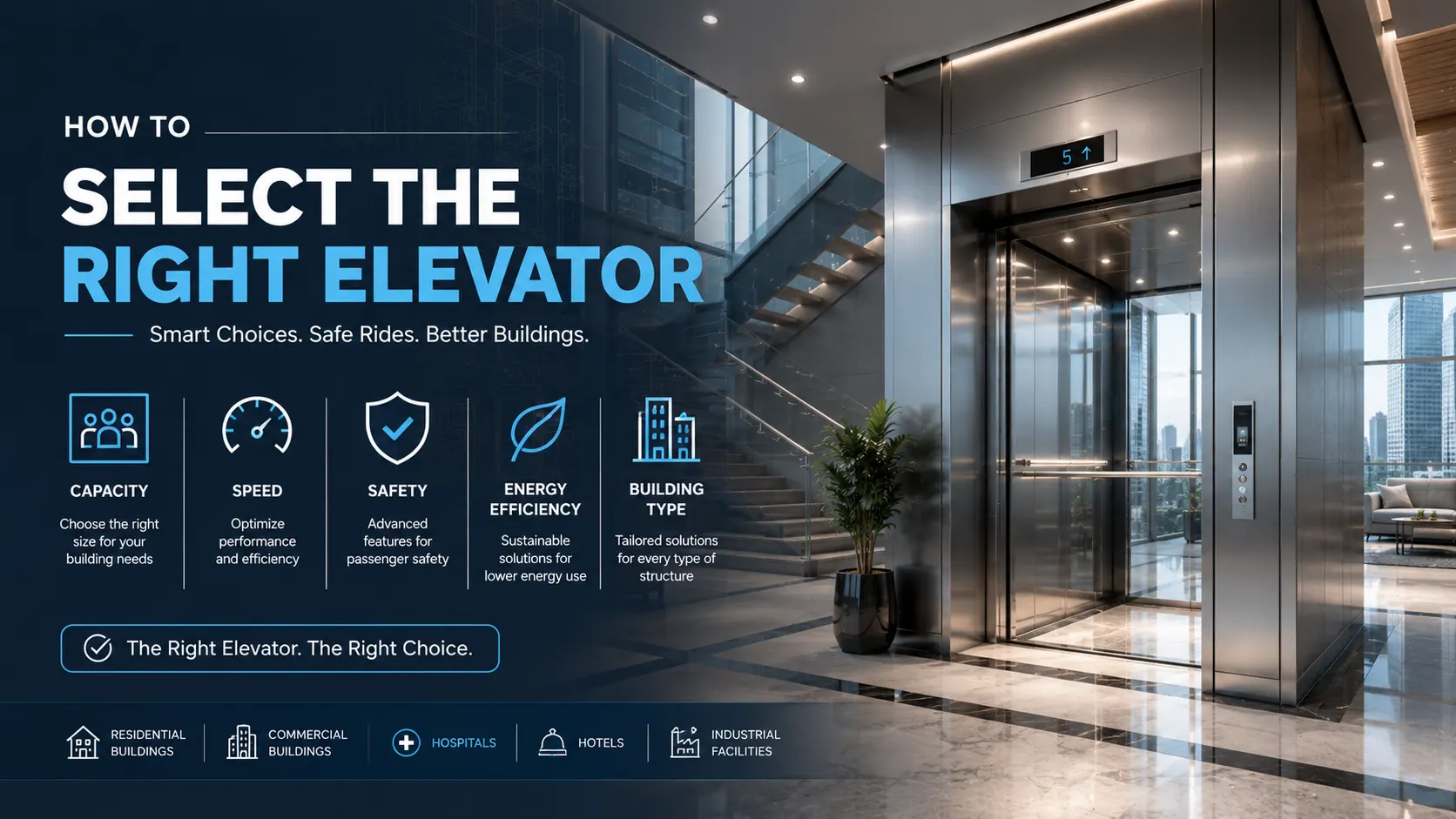
How to Select the Right Elevator for Your Building Type
In many building projects, lift decisions are delayed until the architectural layout is almost fixed. That often leads to the wrong shaft size, poor cabin selection, or unnecessary installation costs.
It can feel too slow. Too small. Too noisy. Too expensive to maintain. And in some cases, it simply does not match the building at all. That is why choosing the right lift from the beginning matters.
Whether you are planning a home, apartment building, office, hospital, or commercial project, the right elevator should match your building’s space, usage, capacity needs, and long-term performance.
In this guide, you will learn how to choose the right lift for your building in a practical, easy-to-understand way.
Why Lift Selection Is More Important Than Most People Think
A lift is one of those building systems people only notice when it does not work properly.
When it is selected well, daily movement feels easy.
When it is selected poorly, problems show up fast.
These usually include:
uncomfortable cabin space
slow movement between floors
frequent servicing issues
poor passenger flow
wasted building space
higher running costs
That is why lift planning should never be treated as a last-minute decision. A lift should fit the building the same way a proper foundation or electrical system does.
What Makes a Lift “Right” for a Building?
The right lift is not always the biggest one. And it is not always the most expensive one either.
A good lift is simply one that matches the real needs of the building.
That includes:
building type
number of floors
daily traffic
user comfort
space availability
safety features
maintenance support
If these things match properly, the lift will usually perform well for years.
1) Start with the Type of Building
This is the first thing you should decide.
Different buildings need different lift systems.
Best Lift Type by Building
| Building Type | Recommended Lift Type |
| Private Home / Villa | Residential Elevator |
| Apartment Building | Passenger Elevator |
| Office Building | Passenger Elevator |
| Hospital / Clinic | Hospitial Bed Elevator |
| Factory / Warehouse | Freight Lift / Cargo Lift |
| Car Parking Building | Car Lift |
| Shopping Mall / Commercial Building | Passenger Elevator / Escalator |
If the lift is for private family use, a home lift usually works best. If the lift is for multiple users, a passenger elevator is usually the smarter option.
2) Think About How Many Floors the Lift Will Serve
Not every building needs the same type of lift system.
A building with 3 floors and a building with 15 floors have very different movement needs.
Why floor count matters
It affects:
lift speed
motor setup
travel distance
ride comfort
performance expectations
Practical example
A small home does not need the same elevator setup as a commercial building with heavy daily use. The more floors you have, the more important lift performance becomes.
3) Understand How Many People Will Use It Every Day
This is where many lift-buying mistakes happen.
A lift may look good in a brochure, but if it cannot handle daily traffic, it becomes a problem very quickly.
Ask yourself.
Will only family members use the lift?
Will many people use it at the same time?
Will it be used all day?
Will it be used during busy hours?
Low-traffic buildings
Examples:
homes
villas
duplex buildings
Best option:
Residential lift
High-traffic buildings
Examples:
apartment buildings
offices
hotels
hospitals
Best option:
Passenger elevator
Why this matters
If too many people depend on a low-capacity lift, you may face the following:
crowding
long wait times
early wear and tear
lower comfort
A lift should always match real movement demand.
4) Choose the Right Lift Capacity
Lift capacity is not just a technical number.
It affects daily comfort and building performance.
Capacity should be based on
number of users
building type
cabin size
movement frequency
passenger or goods use
Residential buildings
Usually need lower capacity because usage is lighter.
Commercial buildings
Usually need higher capacity because multiple people may use the lift together.
Industrial buildings
Freight and cargo lifts need much stronger weight support.
What happens if capacity is too low?
You may experience:
uncomfortable crowding
poor movement flow
more stress on lift components
faster maintenance issues
Choosing the correct lift capacity is one of the smartest decisions you can make early.
5) Check the Available Installation Space
A lift may be technically good but still wrong for your building if the available space does not support it properly.
That is why site planning is essential.
Key space factors to check
shaft size
pit depth
headroom
landing space
machine room requirement
door opening area
If your building has limited space
You may need:
compact lift design
machine room-less lift
home elevator solution
space-saving shaft planning
Why this matters
If the lift and the structure do not match, it can lead to:
extra civil work
design compromise
installation delays
future service problems
This is why lift selection should always happen after site review, not before.
6) Think About Who Will Use the Lift Most
A lift should work well for the people who use it every day.
This is especially important in buildings where comfort and accessibility matter.
If the building includes elderly users
You may need:
smooth movement
easy-to-use controls
comfortable entry and exit
stable ride quality
If the building includes children
You may need:
safe door systems
easy operation
stronger cabin safety features
If wheelchair access is important
You may need:
wider cabin design
easier control access
better entry clearance
If you need to move equipment or goods
You may need:
cargo lift
freight lift
hospital lift
service elevator
A lift should always match the people — not just the project drawing.
7) Know the Main Types of Lifts Before You Buy
Many buyers choose too quickly without understanding the actual lift categories.
Here is a simple breakdown.
Passenger Elevator
Best for:
apartment buildings
offices
hotels
shopping malls
commercial spaces
Why people choose it
suitable for shared use
handles more daily traffic
better for frequent passenger movement
Residential Elevator
Best for:
private homes
villas
duplex houses
Why people choose it
compact design
quieter operation
better home integration
more comfortable private use
Hospital Lift
Best for:
hospitals
clinics
diagnostic centers
Why people choose it
suitable for patient movement
supports stretcher and bed transport
smoother cabin handling
Cargo / Freight Lift
Best for:
factories
warehouses
industrial sites
Why people choose it
stronger load support
better goods movement
industrial-grade performance
Car Lift
Best for:
parking systems
vehicle movement
showrooms
Why people choose it
saves parking space
supports multi-level vehicle storage
8) Safety Should Never Be Optional
A lift should never be selected only because it looks modern. Good design matters. But safety matters more.
Important lift safety features to check
overload protection
automatic rescue device (ARD)
emergency alarm
door safety sensors
interlocking door system
emergency lighting
smooth start and stop
brake safety system
backup power support
Why this matters
A lift is used by people every day.
Safety is not a feature you add later.
It should be part of the decision from the beginning.
9) Think About Maintenance Before Installation
A lift is not a one-time purchase. It is a long-term building system. And every long-term system needs support.
Before choosing a lift, ask
How often does it need servicing?
Are spare parts easy to find?
Is technical support available locally?
Will after-sales service be available later?
Why this matters
Many building owners choose a lift based only on installation cost.
Then later they struggle with:
difficult maintenance
unavailable spare parts
poor service response
expensive repairs
A reliable lift supplier should support you before and after installation.
10) Set a Budget — But Think Long Term
Yes, budget matters.
But the lowest price is not always the best deal.
What affects lift cost?
lift type
capacity
floor count
shaft condition
machine system
control system
cabin finish
imported components
customization
installation complexity
How to Know Which Lift Is Best for Your Building
Here is the simplest way to decide.
Choose a residential lift if:
It is for a private home.
user traffic is low
Comfort matters most.
Space is limited.
Choose a passenger elevator if:
The building is shared.
Many people will use it daily.
You need higher capacity.
Traffic flow is important.
Choose a hospital lift if:
Patient movement is required.
Bed or stretcher transport is needed.
Choose a freight or cargo lift if:
You need to move goods.
The building is industrial or commercial.
Choose a car lift if:
Vehicles need to move between floors.
This simple structure solves most lift selection confusion.
Common Mistakes to Avoid
Many buyers make the same lift mistakes again and again.
Avoid these.
choosing only by price
ignoring future traffic
selecting the wrong capacity
skipping site planning
prioritizing design over performance
not checking after-sales support
buying without technical consultation
A lift is not just a product.
It is part of your building’s long-term performance.
Expert Insight: What Smart Buyers Usually Do First
Experienced buyers usually start with function, not appearance.
They focus on:
building use
expected traffic
space
capacity
safety
supplier support
That is why the best lift decisions are usually made after proper technical discussion — not after seeing a photo or brochure.
This is where professional planning makes a real difference.
Why the Right Lift Supplier Matters
Even a good lift can create problems if the support behind it is weak.
A trusted supplier should help you with:
site assessment
lift recommendation
installation planning
safety guidance
spare parts support
maintenance assistance
after-sales service
That kind of support matters just as much as the lift itself.
Benefits of Choosing the Right Lift
The right lift does more than move people between floors.
It improves the full building experience.
Main benefits
better accessibility
smoother movement
improved user comfort
safer daily use
stronger building functionality
better long-term value
more practical space use
A good lift should not just fit the building.
It should make the building work better.
Frequently Asked Questions
Q1: What is the best lift for a residential building?
A residential lift or home elevator is usually the best option for villas, duplex homes, and private residential properties.
Q2: How do I know what lift capacity I need?
Lift capacity depends on the number of users, building type, cabin size, and how often the lift will be used daily.
Q3: Which lift is best for apartment buildings?
Passenger elevators are usually best for apartment buildings because they are designed for multiple users and regular traffic.
Q4: How much space is needed for a lift?
That depends on the lift type, shaft size, pit depth, headroom, and machine room requirement. A site assessment is always recommended.
Q5: What is the difference between a home lift and a passenger elevator?
A home lift is designed for private residential use, while a passenger elevator is built for shared or commercial building traffic.
Q6: Do lifts require regular maintenance?
Yes. Regular lift maintenance is important for safety, performance, and long-term reliability.
Q7: What should I check before buying a lift?
You should check building type, traffic, capacity, available space, safety features, maintenance support, and supplier reliability.
Need Help Choosing the Right Lift for Your Building?
If you are planning a home, apartment, office, hospital, or commercial project, getting expert advice early can save time, money, and future maintenance trouble.
Merlin Tech Ltd can help you choose the right lift solution based on
building type
traffic requirement
available space
technical feasibility
safety needs
long-term support